


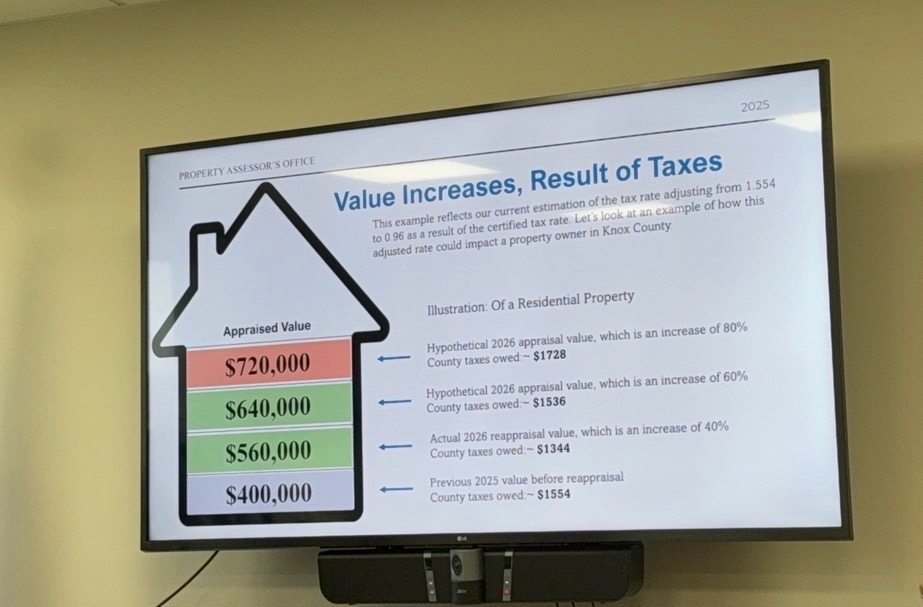
Knox County homeowners recently received (or are about to receive) their 2026 reappraisal notices, and many are experiencing sticker shock. Property values have risen dramatically—an average of about 60% since the last countywide reappraisal four years ago. On May 4, 2026, Property Assessor Phillip Ballard delivered a clear, informative presentation explaining the process, the reasons behind the increases, what it means for taxes, and changes coming to future cycles.
Watch the Presentation here, (media present for this presentation, obviously myself, John North of WBIR, Scott Barker of CompassKnox and a reporter with the daily paper)
Why Such Big Increases?
Real estate in Knox County has “skyrocketed,” as Ballard noted. The reappraisal reflects market conditions from 2022 through 2025, a period of strong demand, rising sales prices, and limited inventory. Appraisals are based on:
• Recent comparable sales
• Property characteristics (square footage, age, condition)
• Location factors (topography, lakefront, cul-de-sac vs. other lots)
• Construction costs and other data for fairness and equity
The goal is to bring assessed values in line with current fair market value. Because this cycle covered four years of growth, the jumps feel large for many properties.
Higher Value ≠ Much Higher Taxes (Revenue Neutrality)
This is the key message from Ballard and county finance officials. Tennessee law requires a certified tax rate that is revenue neutral. The county cannot collect significantly more in property taxes simply because values have risen. Knox County Commission must adjust the tax rate downward to offset the higher assessments.
Current tax rate: $1.554 per $100 of assessed value.
Ballard has projected it could drop to around $0.96 (96 cents) per $100, though the final rate will be set by commission in August.
Example from county materials (assuming ~60% average increase and the projected new rate):
• A home previously valued at $400,000 might now appraise at $640,000.
• The lower rate helps keep the overall county tax revenue stable, though individual bills vary based on how much your property increased relative to the county average.
Properties that increased less than average may see a tax decrease. Those that increased more than average may see a modest increase. Ballard emphasizes this keeps things equitable across the county.
Shift to Two-Year Reappraisal Cycle
One forward-looking highlight from the presentation and recent announcements: Knox County is moving to a two-year reappraisal cycle after this one. This should reduce “sticker shock” in the future by spreading market adjustments over shorter periods and improving accuracy with more frequent updates.
What Should You Do If You Receive a Notice?
1. Review it carefully — Compare to recent sales in your neighborhood and your property’s features.
2. Use available tools — The assessor’s office offers a property tax calculator and fact sheets on their website.
3. Appeal if needed — Informal appeals were open (many deadlines in May 2026, with online options). Over 1,200 appeals were filed early on. Provide evidence like comparable sales or photos. If enough similar properties appeal, broader adjustments can occur.
4. New tax bills arrive in the fall (typically October).
Ballard stressed that his office took extra time to ensure appraisals were as fair and accurate as possible, and staff are available to answer questions.
Bottom Line for Knox County Residents
The reappraisal is not a tax grab—it’s an update to reflect reality in a hot housing market while state rules protect overall revenue neutrality. Some homeowners will pay a bit more, others less, but the system aims for fairness. The move to biennial reappraisals should make future changes smoother.
For the most accurate personal impact, check your notice, visit the Knox County Property Assessor’s website (property.knoxcounty.org), or contact their office directly. Ballard’s presentation is a helpful, straightforward resource for anyone wanting the full context straight from the assessor.
Stay informed, review your assessment, and appeal with data if it doesn’t seem right. Property taxes fund local services—understanding the process helps everyone navigate changes effectively.