

October 5, 2025 – What better way to spend a crisp fall evening in Knoxville than diving into the city’s rich past? Today, I joined Historian Hostess Jennifer Montgomery for one of her signature Local Lore walking tours. If you’re not familiar, Jennifer is a passionate storyteller and Knoxville native who brings history to life through engaging narratives, pointing out hidden gems and forgotten tales right under our feet. Her tours are a perfect blend of education and entertainment, and this one focused on the heart of downtown, starting at the intersection of Gay Street and Wall Avenue. Watch Tonight’s Session here
We gathered at the corner, a spot that feels unassuming today but holds layers of stories. Jennifer kicked things off by directing our attention to the site of the old Briscoe Building, now just a vacant lot on Gay Street. It’s hard to imagine, but this empty space was once home to a bustling landmark.
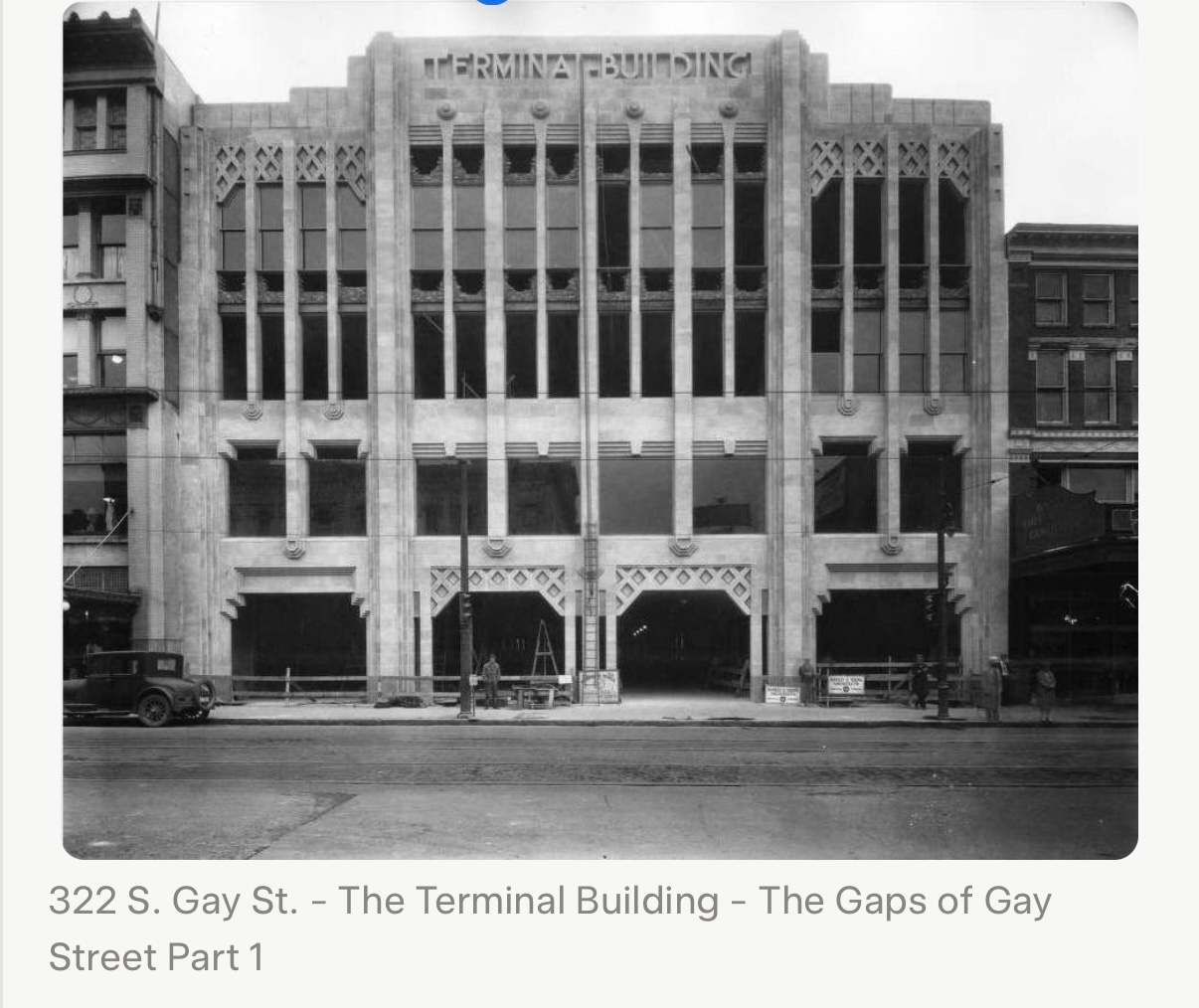
The Briscoe Building, originally constructed in the late 1800s by the Briscoe Brothers, was a prominent commercial structure that suffered a devastating fire in 1897. It was rebuilt and stood tall until 1930, when it underwent a major transformation. The ground floor was hollowed out to create a bus terminal, with the upper floors housing a Sears store. The revamped structure, renamed the Terminal Building, became an Art Deco icon on Gay Street, serving as a key transportation hub. At one time, the bus terminal operated on the State Street side of the building, funneling passengers in and out of downtown Knoxville.

Tragically, another fire in 1974 destroyed the building entirely, leaving the lot vacant to this day. Jennifer painted a vivid picture of the era’s hustle – trolleys clanging, shoppers bustling, and buses roaring through. What made this stop even more special was one of our fellow explorers: a direct descendant of the Briscoe family! They shared personal anecdotes, adding a heartfelt, living connection to the history. It’s moments like these that make Jennifer’s tours feel so intimate and alive.
From there, we strolled down the now-short Wall Avenue, a quiet, one-way stretch that’s easy to overlook in modern Knoxville. But as Jennifer explained, this street has undergone dramatic changes, especially before and after the Tennessee Valley Authority (TVA) developments.

In the early 1900s, Wall Avenue was a vibrant, densely packed corridor teeming with unique buildings, businesses, and life. It was a hub of activity, with shops, hotels, and even recording studios where early country and blues musicians laid down tracks. Photos from the era show a bustling street lined with eclectic architecture, each structure telling its own story.
All that changed in the 1970s when the TVA decided to build its twin towers headquarters. To make way for the massive complex, Knoxville demolished dozens of historic buildings along Wall Avenue, effectively shortening and suburbanizing the street. What was once a lively urban artery became a quieter path with shrubbery and open spaces, overshadowed by the imposing towers. Jennifer lamented the loss – “If those buildings were still here, Wall Avenue could be worth millions and famous for its charm,” she said, echoing sentiments from local historians.
Walking it now, you can almost feel the ghosts of the past – the demolished St. James Hotel, once a music history hotspot, now buried under the TVA site. The towers themselves, completed in 1976, stand as a reminder of progress at the cost of heritage. Jennifer encouraged us to reflect on urban development: How do we balance growth with preservation?
The tour wrapped up with lively discussions among the group, sharing our own Knoxville connections. If you’re in town, I highly recommend joining one of Jennifer’s Local Lore adventures – they’re informative, fun, and a great way to appreciate the Scruffy City’s hidden depths. Check out her site here for upcoming dates!

Until next time, keep exploring Knoxville’s lore.