


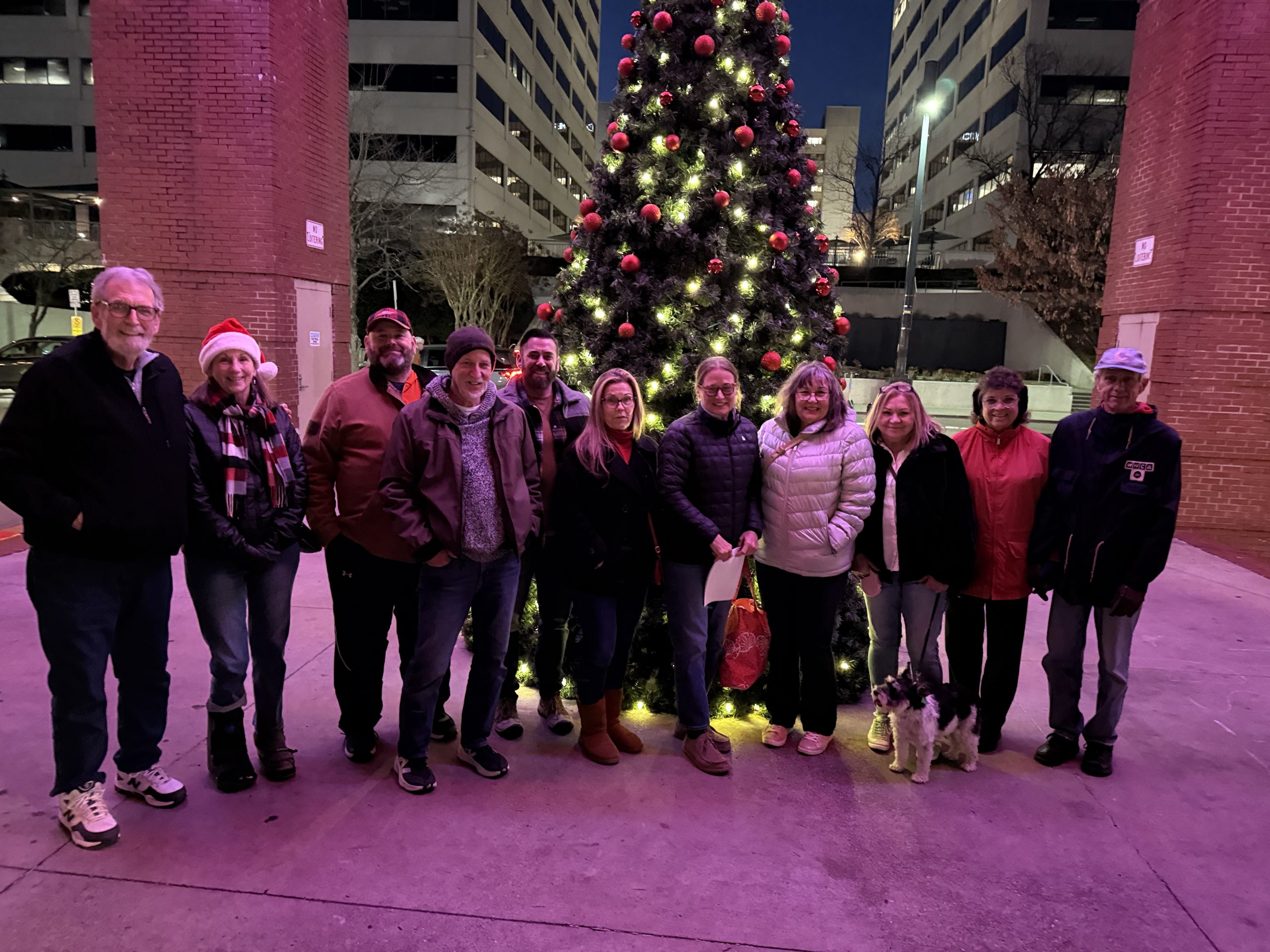
December 18, 2025 – Last week, on a crisp Sunday afternoon (December 7, to be exact), Local Lore Knoxville wandered into Knoxville’s Market Square, drawn by the holiday glow and the promise of lingering history. The square was alive with seasonal magic: twinkling lights draped across the pedestrian walkway, the Holidays on Ice rink buzzing with skaters, and the faint aroma of hot cocoa mixing with live music from a nearby stage. There was even a Winter Farmers Market vibe with a few hardy vendors braving the chill. It felt festive and welcoming, a perfect spot for holiday photos or a warm drink at one of the surrounding cafes.
But beneath the modern bustle—restaurants like Cafe 4, Stock & Barrel, and Tomato Head drawing crowds, shops offering unique gifts—lies a deeper story. Market Square has been Knoxville’s heart since 1854, when developers William Swan and Joseph A. Mabry donated the land for a public farmers’ market. By the 1910s and 1920s, it was a thriving hub of commerce, politics, and everyday life. We spent an hour “visiting” key spots around the square, imagining what stood there a century ago. Here’s the version Jennifer Montgomery of Local Lore Knoxville etched in historical stroll, blending today’s charm with echoes from 1910-1930. Watch the video here.
The Center of It All: Where the Market House Once Stood
We started in the open heart of the square, now a pedestrian plaza with fountains, benches, and the ice rink. From 1897 to 1960, this spot was dominated by the grand Market House—a tall, brick Victorian structure with a clock tower and auditorium upstairs. In the 1910s-1920s, its ground floor housed about 60 stalls where farmers sold fresh produce, meats, eggs, butter, and flowers. Horse-drawn wagons lined the edges on market days (especially Saturdays), and the air buzzed with haggling vendors and shoppers prepping for holidays. Newspapers described it as the best place in town for seasonal feasts.
The upstairs hall hosted everything from political rallies to early country music performances. Suffragists like Mrs. L. Crozier French spoke here in the fight for women’s votes around 1920. City Hall occupied the north end until 1924, making this truly Knoxville’s civic center.
Today, standing here amid skaters and string lights, it’s easy to picture the chaos and community of those market days.
The North Side: Department Stores and Daily Essentials
Circling north (toward Wall Avenue), many buildings housed dry goods and clothing wholesalers. At 36 Market Square (the Woods & Taylor Building, built 1901), Woods & Taylor operated a major clothing and furnishings business from 1912 to 1934—a staple for locals shopping for suits or household goods.
Nearby addresses featured groceries, hardware stores, and dime stores. Watson’s Department Store eventually absorbed several spots, expanding in the 1930s. Boarding houses on upper floors housed travelers or workers.
Today, this side has boutiques and eateries, but the facades whisper of bustling retail from the Roaring Twenties.
The East Side: Cafes, Theaters, and Prohibition-Era Whispers
Heading east, we paused near 37 Market Square, home to the Gold Sun Cafe from 1920 well into the 1960s—a go-to spot for quick meals and coffee amid the market frenzy.
At 31 Market Square, furniture stores gave way to the Crystal Theater by 1935, but earlier spots included harness shops transitioning as cars replaced horses. Prohibition (1920-1933) likely fueled discreet “soft drink” stands or underground activity in basements.
The east side overlooked the Market House, prime for people-watching in the 1920s jazz age.
The South Side: Groceries, Drug Stores, and Confectioneries
On the south end (near Union Avenue), the iconic Peter Kern Building (1 Market Square, built 1876) stood out. German immigrant Peter Kern ran a bakery, confectionery, ice cream saloon, and toy shop here—perfect for holiday treats in the early 1900s. Upper floors hosted Oddfellows meetings and ballrooms.
Nearby: drug stores (like G.W. Albers at 14), meat markets, and more groceries. Addresses like 32 featured coffee and tea importers (C.D. Kinney Co. by 1920) and lunch rooms.
Today, modern cafes occupy similar spots, but you can almost smell the fresh-baked goods from Kern’s era.
The West Side: Hardware, Produce, and Wholesale Hustle
Finally, the west side featured heavy hitters like Ziegler Building (9 Market Square), a hardware store by 1920 after earlier meat packing and restaurants.
Wholesale produce dealers and commission merchants dotted the area, supplying the market stalls. In the 1920s, this was gritty commerce—slaughterhouses phased out, but the energy remained.
As we wrapped up out visit, we marveled at how Market Square has evolved yet endured. From 1910-1930, it was Knoxville’s unpolished gem: a mix of farmers, politicians, shoppers, and dreamers. Today, it’s polished but still vibrant—a place where history feels alive under holiday lights.
If you’re in Knoxville this season, go wander Market Square yourself. The lore is waiting.