


The Fourth and Gill neighborhood in Knoxville, Tennessee, is a charming historic district just north of downtown, listed on the National Register of Historic Places. It showcases over 150 years of urban evolution, with architecture spanning Queen Anne, Craftsman, Richardsonian Romanesque, and other late 19th- and early 20th-century styles. This area was once part of Knoxville’s expansion during the late 1800s, featuring grand homes, churches, and remnants of an era when horses powered daily life—from transportation to commerce.
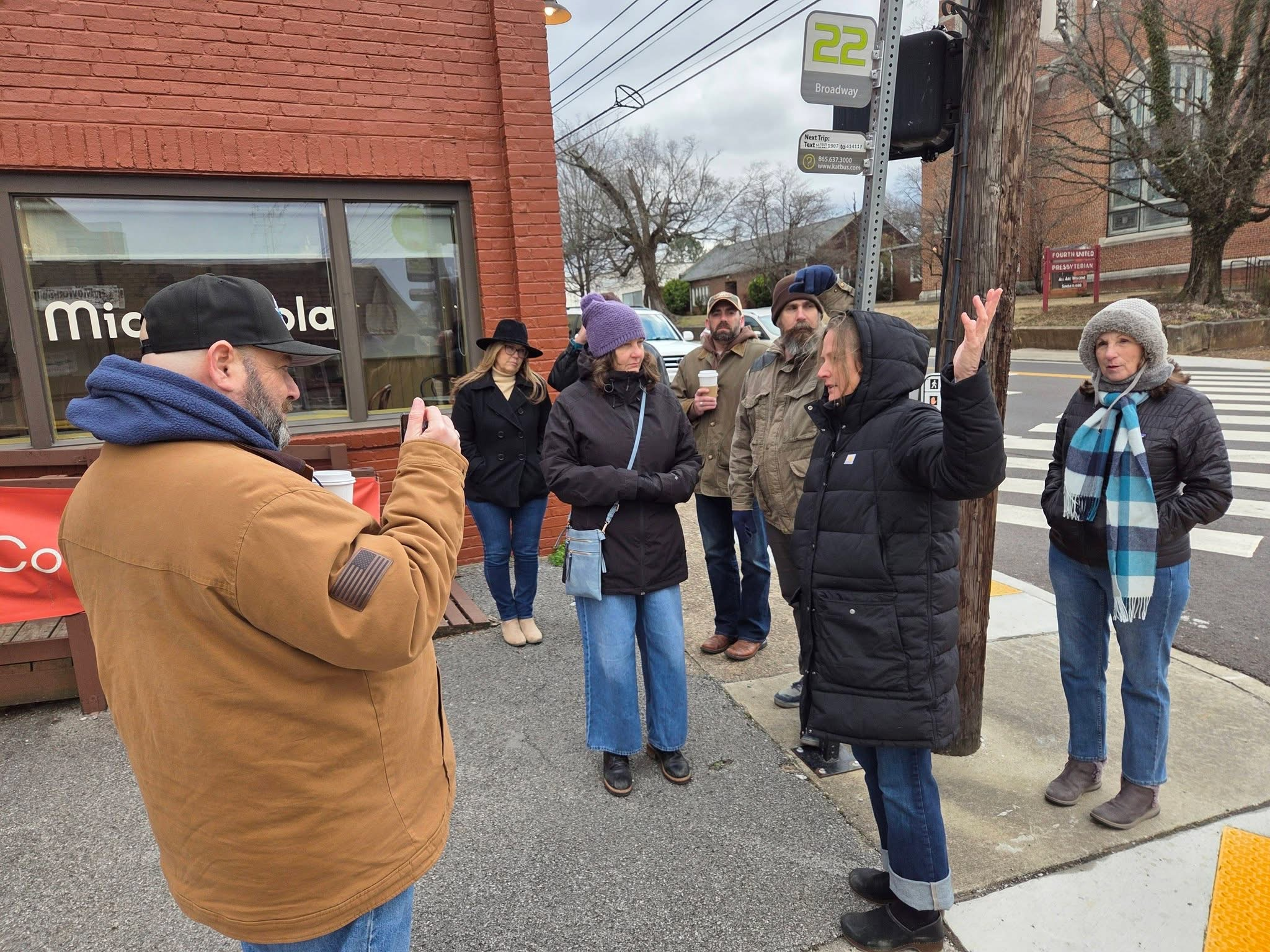
A recent walking tour captured in the video Local Lore Knoxville • History & Horses of Fourth & Gill (recorded February 22, 2026) brings these layers to life. Led by Jennifer Montgomery, Principal Broker at Wallace Real Estate’s Downtown Knoxville office and a dedicated local historian, the tour blends storytelling, architecture spotting, and neighborhood anecdotes. Jennifer’s “Local Lore Knoxville” series turns sidewalks into portals to the past, focusing on immersive, boots-on-the-ground experiences that reveal tales textbooks often skip.
Horses and the Livery Stable Legacy
The tour centers on Knoxville’s equine history in Fourth and Gill, highlighting how horses shaped the area before automobiles took over.
A standout stop is a rare surviving livery stable on North Broadway (now repurposed as a co-working space and coffee house). Participants marvel at its preserved structure—the only known standing building originally constructed as a livery stable in the area. Historic photos shared during the tour show horses entering the building, emphasizing its scale and function. Inside, the exposed interior evokes its past life as a barn-like space for stabling and caring for horses.
Carriage houses (or “car barns”) and horse barns appear throughout the neighborhood. Several well-preserved examples feature original features like high doors for carriages, side entrances, dirt floors (in some cases historically), and even quirky rooftop elements for ventilation or hay access. These outbuildings reflect how homes accommodated horses, with some later converted to garages. The tour notes how many residences predate cars, leading to creative adaptations like reorienting houses or selling front yards for commercial use (e.g., gas stations in old lawns).
Streetcars in early Knoxville were initially horse-drawn, tying the neighborhood’s development to equine transport. A shared image shows a dramatic streetcar crash involving horses, illustrating the risks and realities of the time.
The Famous Runaway Horse Incident of 1902
One of the tour’s highlights is the retelling of a dramatic 1902 incident involving a runaway horse. Elsie Peters (youngest daughter of George W. Peters, president of Peters Bradley Mill Company) and her cousin Miss Whitehead were driving along Lovenia Avenue when two noisy motor bicycles (early motorcycles) spooked their horse.
The frightened animal bolted west along Lovenia. At the southwest corner of Graff Street and Lovenia, a well-meaning passerby waved an umbrella to stop it—worsening the panic. The horse veered between poles, snapping one off and throwing the women from the buggy. Elsie struck the pole with her head, and both were bruised but miraculously escaped serious injury (no broken bones). They received aid nearby, then moved to the Peters home at 1408 Broadway. The horse continued its “mad career” toward Broadway before being caught and returned to K’s delivery stable—the same livery stable tour starting point.
The group retraces the path: from Lovenia Avenue, past the corner with construction tape (perhaps a modern echo of the broken pole), to where the horse was recaptured and stabled. It’s a vivid reminder of how quickly technology (motorcycles) disrupted traditional horse-powered life.
Architectural Gems and Neighborhood Charm
Beyond horses, the tour spotlights stunning homes and structures:
• Haynes/Haynes Place — A grand mansion whose driveway became a street.
• Greystone (Richardsonian Romanesque style).
• Former schools like Brownlow School (now condos) and Macaulay School site.
• Eclectic mixes, like Spanish Eclectic with Dutch Colonial elements.
• Unique details: arched windows varying by floor, enclosed upper rooms, and period carriage houses.
Casual chats add flavor—weather complaints (freezing cold!), real estate stories (Jennifer’s past sales in the area), local politics, and even a nod to modern Knoxville life.
Fourth and Gill remains a vibrant, walkable community with tight-knit residents, porch events, and preserved history. Tours like this remind us how neighborhoods evolve while holding onto their roots.
If you’re in Knoxville, check out Local Lore Knoxville for upcoming walks—Jennifer’s passionate, engaging style makes history feel immediate and fun. Whether you’re a lifelong resident or visitor, these stories turn familiar streets into something extraordinary.
For more on the neighborhood, visit the Fourth & Gill Historic District site. And don’t miss the video—it’s a perfect chilly February snapshot of local lore in action!