

Knox County‘s debate over residential density has been one of the defining land-use discussions of recent years. County leaders have repeatedly emphasized the need to slow high-density growth in unincorporated areas, ultimately adopting policies that generally limit new residential developments to approximately four dwelling units per acre.
Yet just a few miles away, inside the City of Knoxville, a very different standard appears to be in play.
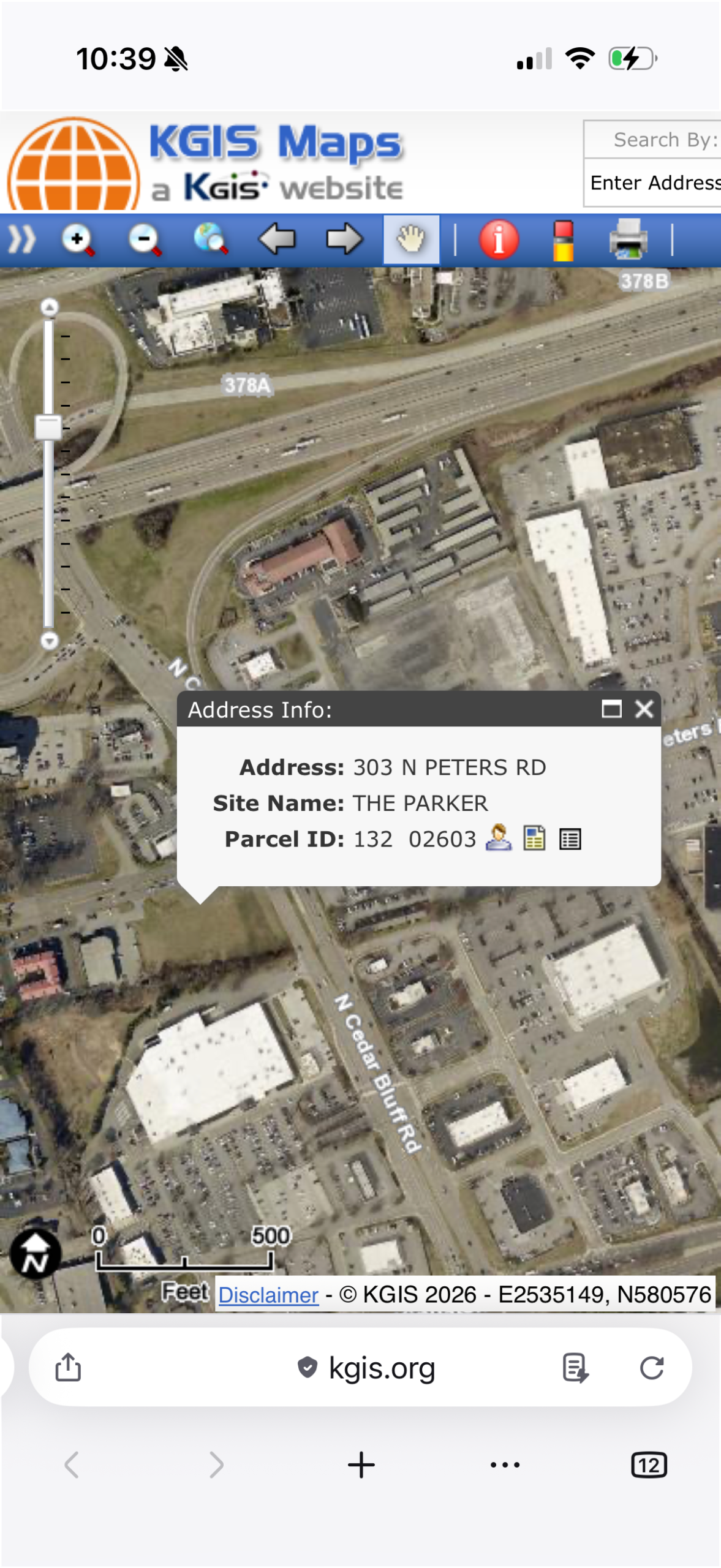
A proposed development at 303 N. Peters Road, near Cedar Bluff, is expected to bring 202 apartment units on approximately two acres of land. That equates to roughly 100 units per acre—twenty-five times the density that many private developers are now expected to follow in Knox County.
The project is being developed through a partnership between Knoxville’s Community Development Corporation (KCDC) and Elmington Capital Group. According to project information, 40 percent of the apartments will be reserved for households earning less than 60 percent of the area’s median income, with units ranging from one-bedroom apartments to four-bedroom units.
A source familiar with the project tells me that much of the required parking is expected to be accommodated through a parking garage constructed beneath the apartment building, allowing the development to achieve a much higher residential density on the site. While that information has not yet been publicly confirmed, it illustrates how projects of this scale can maximize land use.
The purpose of this article is not to criticize affordable housing. Knox County and the City of Knoxville need housing at every price point, and many families struggle to find homes they can afford. It is also worth asking whether Knoxville-Knox County Planning’s funding structure—which relies on appropriations from the City of Knoxville and Knox County, along with fees collected from development applications—creates at least the perception of a conflict of interest.
The question is one of consistency.
If county officials believe four units per acre is the appropriate limit for private-sector developments because of concerns about traffic, infrastructure, schools, utilities, and neighborhood compatibility, why do those same concerns appear to disappear when a quasi-government entity is involved in a project inside the city?
Should government-affiliated developments be allowed to build at densities that private developers cannot?
Should taxpayers expect one set of rules for government-backed projects and another for everyone else?
Supporters of the Peters Road development will likely argue that structured parking, public investment, and affordable housing justify a higher density. Those are legitimate arguments worthy of discussion.
But the public also deserves an answer to another legitimate question:
If 100 units per acre can be designed and constructed successfully at one location, what is the planning principle that makes four units per acre the appropriate limit elsewhere?
Land-use policy should be based on objective standards—not on who is proposing the project.
Whether one supports higher-density housing or prefers lower-density development, the rules should be applied consistently. Otherwise, the perception becomes that government and its development partners operate under one set of standards while private property owners are required to follow another.
That is a conversation worth having—not just about this project at 303 N. Peters Road, but about the future of growth, housing, and fairness throughout Knox County and the City of Knoxville.
The Elmington Properties in Knoxville/Knox County are Dunhill Flats, Moss Grove, Residences at Hardin Valley, Southside Flats, Sutherland Flats, Flats at Pond Gap and Young High Flats.